The Tropical Resources Institute (TRI) offers a range of resources to support students pursuing research, practice and professional development in the tropics. These resources include guidance on risk assessment, fieldwork preparation — including health, safety and cultural considerations — and practical advice on writing and presenting research.
Risk Assessment
Review the Yale Field Safety Handbook and the country-specific WHO Risk Assessment page to remain informed about potential risks for your travel.
Preparing for Fieldwork
View the November 4, 2025 “International Travel Guidance” memorandum from Sunil Amrith, Vice Provost for International Affairs.
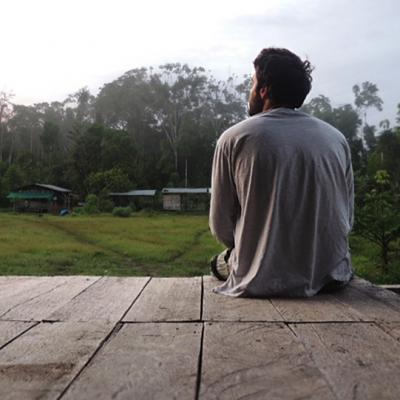
TRI is committed to ensuring that its Fellows feel safe and supported while they are engaged in fieldwork overseas. The following are some recommended resources that should be helpful for both seasoned and inexperienced travelers to serve as a quick guide for faculty and students traveling away from campus (domestically or internationally). Additional information can be found on the Yale International Tool-Kit website. Following these steps will enable the School and University to better assist you if needed.
Note: You must be logged into the Yale Library system (or a similar system) to access some of these documents.
Before You Depart
- Register your travel using the International SOS Travel Tracker (you will need your netID and must use a Yale networked computer or Yale VPN to do so).
- Confirm passport and visa requirements.
- Make a travel health appointment.
- Share travel details with your advisor, family and friends, and the YSE Dean’s Office*.
- Consider signing out one of the YSE Garmin InReach devices if you will be in an area outside of cell coverage – follow this link to make a request.
- Reach out to International SOS to request a customized pre-departure briefing specific to your itinerary – complete the travel briefing form and email it to philadelphia@internationalsos.com. ISOS provide assistance and advice, medical and dental referrals, access to clinics and pharmacies, mental health support, and pre-departure planning and coverage applies for Yale-related trips 100 miles+ away from your permanent residence.
- Read about your health insurance coverage.
- Plan to carry a physical copy of the International SOS card with you and install the TravelTracker app.
- Take photographs of important documents (visas and passports).
- Find even more pre-departure advice on being an educated traveler here.
During Your Travel
- Use the “check in” feature in the Travel Tracker app to record your location.
- Continue to update the Travel Tracker app as your plans change.
- Share travel plan changes with advisors, the YSE Dean’s Office*, family and friends when they occur to make sure your contacts have the best information to reach you in case of emergency.
- Carry your charged cell phone or Garmin InReach device with you at all times.
In the Event of Emergency
Medical Emergency
- Where serious injury or illness has occurred, immediately seek medical treatment at the closest medical facility and, if relevant, notify your in-country contacts right away. If you’ve signed one out, your Garmin InReach device can be used to declare an emergency and allow you to text pre-programmed YSE contacts as well as International SOS.
- Alert Yale’s travel assistance provider International SOS of your emergency (call collect +1-215-942-8478). They will notify the Yale University Office of International Affairs, Risk Management Office, Yale Health, and, if relevant, YSE.
- Notify your personal health care provider of your medical treatment. If you are a member of Yale Health, note that Yale Health will receive notification of the case directly from International SOS and can reach out to you as necessary. In an emergency, always seek treatment first.
Political Unrest / Natural Disaster
- Alert Yale’s travel assistance provider International SOS to your emergency (call +1-215-942-8478, you may call collect). They will notify the Yale University Office of International Affairs, Risk Management Office, and, if relevant, YSE.
- Contact the nearest U.S. Embassy or consular service, or the embassy of your country of citizenship.
Emergency Advice for Advisors:
- If you receive a direct communication from a student indicating an emergency (medical, political or natural), contact International SOS (1-215-942-8478, you may call collect) to provide all of the information you have. They will notify the Yale University Office of International Affairs and Risk Management. Please alert the YSE Dean’s Office* as well.
*Dean's Office Contact: Annise Dobson annise.dobson@yale.edu and Haille Rae haille.rae@yale.edu; 203-432-5109
Field Site Information
The UK's Royal Geographical Society maintains the World Register of Field Centres, a database of >700 field centres and facilities that welcome international researchers.
Health and Safety Abroad
- Center for Disease Control - Information on recommended vaccines by country and regional health alerts
- Yale Health - Coverage and vaccinations
- Passport Health- Information on medical needs
- Yale SHARE Center - Sexual harassment and assault
- Yale FES Title IX Resources - Information on sexual harrassment and the FES Title IX working group
- Northwestern University Discrimination, Harassment and Sexual Misconduct Abroad
- Clancy, K., et al. 2014. Survey of academic field experiences (SAFE): Trainees report harassment and assault. PLoS ONE 9, e102172.
- Yale Security - Emergency help and incident reporting
- Find U.S. Embassy and consular services
- Yale ITS guide to Traveling Securely
- Carrying Money Overseas
- International Toolkit: Managing International Financial Needs
Cross-Cultural Issues
- U.S. State Department Country Pages - Helpful guidelines for travel to specific countries.
- McGuire, K. et al. 2012. Dramatic improvements and persistent challenges for women ecologists. BioScience 62, 89–196.
- Zimbroff, J. 2007. Cultural differences in perceptions of and responses to sexual harassment. Duke Journal of Gender Law and Policy 14, 1311–1341.
- Walters, B.B. et al. 2005. Constraints and opportunities for better silvicultural practice in tropical forestry: an interdisciplinary approach. Forest Ecology and Management 209, 3–16.
- Austin, T. 2008. Coping with Payola: Field ventures from Mindanao. Human Organization 67, 173–180.
- Chambers, R. 1981. Rural poverty unperceived: Problems and remedies. World Development 9, 1–19.
- Nader, L. 1972. Up the anthropologist: Perspectives gained from studying up. pp. 284–311. In: Hymes, D. (ed.) Reinventing Anthropology. University of Michigan Press, Ann Arbor, USA.
Writing and Presentation Tips

One of the tenets of TRI's mission is training, and that includes providing guidance and feedback on students' academic writing and research presentations. These are some helpful resources and style guides, and you can always contact the TRI office directly with questions.
TRI bulletin authors should refer to these detailed guidelines:
Reading Strategies
- Read like a Graduate Student
- How to Read a Book in Two Hours or Less
- How to Read-Like-a-Grad-Student
Writing
At Yale
- Yale Center for Teaching and Learning - Writing seminars, groups, and one-on-one consultations
- Yale Center for Social Science Information - Workshops and trainings on library databases, citation managers and other topics
Proposals and Manuscripts
When should you start writing? Now!
Some brief overviews …
- Wilke, K. 2013. When to start writing. Serial Mentor blog
- Wilke, K. 2013. How to write a scientific paper. Serial Mentor blog
- Bradshaw, C. 2012. How to write a scientific paper. Conservation Bytes blog
- Writing Science An overview of Schimel's book
More details …
- McGill, B. 2012. Writing clearly. Dynamic Ecology blog
- McGill, B. 2014. Writing like a fiction author. Dynamic Ecology blog
- Schimel, J. 2012. Writing Science: How to Write Papers that get Cited and Proposals that get Funded Oxford University Press, USA
- Elefteriades, J.A. 2002. Twelve tips on writing a good scientific paper. International Journal of Angiology 11, 53–55.
- Lertzman, K. 1995. Notes on writing papers and theses. Bulletin of the Ecological Society of America 76, 86–90
Blogposts
- Mirandilla, I. 2017. Capture your readers: 8 tips to writing engaging blog posts. hongkiat.com
Presenting
Structuring your talk
Audience: Most people in the audience are not in the same field as you. Start general: What big idea, question, or problem are you working on? and how might this be of interest to a wide audience. Then, narrow down to the knowledge gap and what you did to fill the hole.
Narrative: A good talk usually tells a story. What is your question or problem? How did you address it? What is your answer? What does your answer mean for the bigger picture? In most cases, a talk will follow the narrative structure of the paper on which it is based.
Outline: In a short talk, there is usually no need for an outline.
Slide design
Slides are there to support you talking. The audience will read or look at anything and everything on the slide, so make sure that what is there is useful and not distracting.
Titles: Use the title of each slide to convey the take-away message E.g., “Q2: Women earned twice as much as men in Otavalo”, not 'Results: earnings by gender”.
One idea per slide: One result, chart, message per slide.
Text: Use text to help convey your message, but don't read your slides to the audience.
Fonts and typeface: Use easy-to-read large san serif fonts (e.g., helvetica, arial) for most text (especially labels and numbers on graphs!). Smaller text is fine for credits, links etc.
Slow reveal: Display and reveal complex ideas or charts piece by piece.
Charts and graphs
Charts and graphs are powerful visual ways to communicate data and information.
Purpose: Why are you showing this graph? A chart should have a job, e.g., make us aware of a problem, answer a question, or persuade us to action.
Chart type: Use a chart type that works for both the purpose of the chart and the data.
Formatting: Follow best-practice formatting guidelines, to present the data quickly (it can be read and understood in as little time as possible), comfortably (with as little cognitive effort as possible), and safely (with a low risk of the audience misrepresenting the data).
Preparation
Practice: Practice on your own.
Practice: Then practice as if you were giving the talk: Standing up, in a room, in front of people who are more experienced than you.
Feedback: Get feedback from those more experienced people. If you are brave, video yourself and watch it!
Practice: Again! And again.
Delivery
There is no One-Best-Style: Be yourself, and try to avoid things like fidgeting, mumbling, pacing, nervous tics, etc. All these things get better with practice and as you feel more comfortable in front of an audience.
Audience: Look at and connect with the audience; talk to the audience, not the the slide; ignore the people sleeping and focus on the smilers! They are all on your side and want you to do well.
Describe-Highlight-Summarize: For images, charts, and tables, first describe the topic (what does it show, what are the axes, what is each bar/point/line); then highlight the points of interest (what result does the graph display); finally summarize the take-away (what can we conclude, how does the chart answer your question).
Talk for listeners: Talk in active voice, short sentences for key information.
Jargon: Avoid jargon, explain acronyms, and speak to the level of the audience.
further reading
- University of Virginia Oral Presentation Tips.
- Schwabish, J. 2016. Five ways researchers can improve their presentations. Urban Institute.
- Healy, K. 2018. Making slides. Personal blog.
- Fox, J. 2011. Advice for giving a good talk in ecology and evolution. Dynamic Ecology blog.
- Desbarats, N. 2023. Practical Charts.
- Schwabish, J. 2016. Better Presentations. Columbia University Press.
- Wilke, C. 2019. Fundamentals of Data Visualization. O'Rielly Media.
Coaching
We recommend that Fellows reach out to YSE Communications Coach Julie Vance to get feedback and help on presenting. Sign up here.
Posters
- Zen Faulkes. Better Posters blog. Academic conference posters are often ugly, with tiny text, confusing layouts, and dubious colour schemes. Better Posters is about making posters informative and beautiful.
- Colin Purrington. Designing conference posters. A poster allows you to more personally interact with the people who are interested in your topic. If all text is kept to a minimum (500-1000 words), a person could fully read your poster in 5–10 minutes.
Grammar and Style
- Council of Biological Editors. 1994. Scientific Style and Format. The CBE Manual for Authors, Editors, and Publishers. Cambridge Univ. Press; Cambridge, UK. 6th edition
- The Punctuation Guide